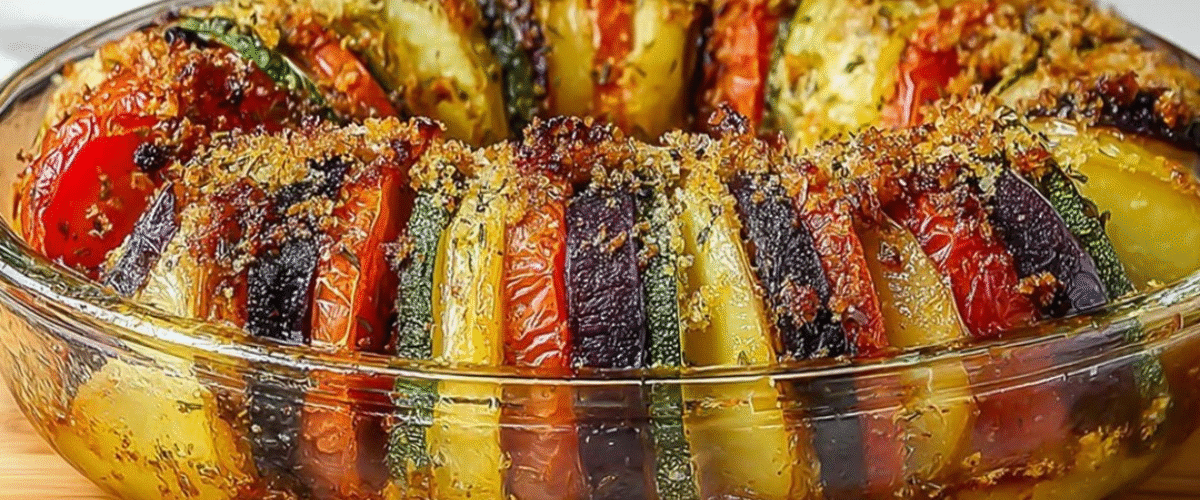
Esta vibrante receta mediterránea de verduras rellenas combina lo mejor de los productos de verano en un plato espectacular, visualmente deslumbrante y con un sabor increíble. Perfecta para esas tardes cálidas en las que se busca algo sustancioso y fresco, esta receta transforma verduras sencillas como berenjenas, calabacines, tomates y patatas en una comida de calidad. La combinación de hierbas aromáticas, queso fundido y pan rallado perfectamente sazonado crea un plato ideal como plato principal vegetariano o como una guarnición excepcional para carnes y pescados a la parrilla.
Ingredientes
Para las verduras:
- 1 berenjena grande (aproximadamente 300 g / 10,5 oz)
- 1 calabacín mediano (aproximadamente 250 g / 9 oz)
- 2 tomates grandes (aproximadamente 300 g / 10,5 oz)
- 1 papa grande (aproximadamente 200 g / 7 oz)
- 1 cebolla roja mediana (aproximadamente 150 g / 5,3 oz)
- 1 diente de ajo picado
- Sal para preparación
Para el relleno:
- 50 g (1¾ oz / ½ taza) de pan rallado
- 30 g (1 oz / ⅓ taza) de queso parmesano rallado
- 100 g (3,5 oz / 1 taza) de mozzarella o queso mixto, rallado
- 1 cucharadita de pimentón
- ½ cucharadita de pimienta negra
- 1 cucharadita de mezcla de hierbas italianas
- 3-4 cucharadas de aceite de oliva virgen extra
- Sal al gusto
Instrucciones
Preparando las verduras
Paso 1: Lave bien la berenjena y córtela en rodajas gruesas de aproximadamente 2 cm (¾ de pulgada) de grosor. Espolvoree generosamente con sal por ambos lados y colóquela en un plato grande o tabla de cortar. Deje reposar la berenjena durante 15 minutos para que pierda el amargor. Este proceso de salazón también ayuda a obtener una mejor textura al hornear.
Paso 2: Mientras la berenjena reposa, prepare el resto de las verduras. Lave el calabacín y córtelo en rodajas de grosor similar al de la berenjena. Un tamaño uniforme garantiza una cocción uniforme.
Paso 3: Lave los tomates y córtelos en rodajas gruesas, retirando la parte superior e inferior. Reserve estos extremos para el relleno si lo desea o guárdelos para otro uso.
Paso 4: Pele la papa y córtela en rodajas ligeramente más gruesas que las otras verduras, de aproximadamente 2,5 cm (1 pulgada) de grosor, ya que las papas tardan más en cocinarse.
Paso 5: Pela la cebolla morada y córtala en rodajas gruesas, dejándolas intactas para el relleno. Separa las rodajas con cuidado para que conserven su forma.
Creando el relleno
Paso 6: En un tazón grande, combine el pan rallado, el queso parmesano rallado y la mitad del queso mozzarella. Esta mezcla creará una cobertura dorada y crujiente al hornear.
Paso 7: Añade el ajo picado, el pimentón, la pimienta negra y las hierbas italianas a la mezcla de pan rallado. Sazona con sal al gusto, teniendo en cuenta que el parmesano ya aporta sal.
Step 8: Gradually drizzle in the olive oil while mixing, until the breadcrumb mixture holds together when pressed but isn’t overly wet. The mixture should be moist enough to stick together but not soggy.
Preparing for Baking
Step 9: Preheat your oven to 190°C (375°F). Lightly grease a large glass baking dish or ceramic casserole dish with olive oil.
Step 10: After the eggplant has rested for 15 minutes, pat each slice dry with paper towels to remove excess moisture and salt. This step is crucial for achieving the perfect texture.
Step 11: Using a small spoon or knife, carefully hollow out the centers of the vegetable slices, creating small wells for the filling. For the eggplant and zucchini, scoop out about half the flesh. For tomatoes, remove the seeds and some pulp. For potatoes, create a shallow depression in the center.
Assembling the Dish
Step 12: Arrange all the prepared vegetables in the baking dish, alternating colors and types for an attractive presentation. The vegetables should fit snugly but not be overcrowded.
Step 13: Brush the tops and sides of all vegetables lightly with olive oil. This helps them brown beautifully and prevents drying out during baking.
Step 14: Fill each vegetable well generously with the prepared breadcrumb mixture, pressing it down gently to ensure it stays in place during baking.
Step 15: Sprinkle the remaining mozzarella cheese over the top of the filled vegetables, creating an even layer that will melt and brown during baking.
Baking to Perfection
Step 16: Place the baking dish in the preheated oven and bake for 45 minutes, or until the vegetables are tender when pierced with a fork and the tops are golden brown and crispy.
Step 17: Check the dish halfway through baking. If the tops are browning too quickly, cover loosely with aluminum foil to prevent burning while allowing the vegetables to finish cooking.
Step 18: Test for doneness by inserting a fork into the thickest vegetables, particularly the potatoes. They should be completely tender throughout.
Final Touches
Step 19: Remove the dish from the oven and let it rest for 5-10 minutes before serving. This resting time allows the juices to settle and makes serving easier.
Step 20: Garnish with fresh herbs if desired, such as chopped parsley, basil, or oregano. Serve hot as a main dish or alongside grilled meats or fish.
Time and Serving Information
Preparation Time: 25 minutes Salting Time: 15 minutes Baking Time: 45 minutes Total Time: 1 hour 25 minutes Servings: 4-6 people Difficulty Level: Easy to Intermediate
Nutrition Information (Per Serving)
- Calorías: 245
- Proteínas: 12,8 g
- Carbohidratos: 28g
- Fibra dietética: 6,2 g
- Grasas totales: 11,5 g
- Grasas saturadas: 4,8 g
- Sodio: 485 mg
- Potasio: 715 mg
- Calcio: 195 mg
- Hierro: 2,1 mg
- Vitamina C: 25 mg
- Vitamina A: 850 UI
Esta receta mediterránea de verduras rellenas es una auténtica bomba nutricional, ya que proporciona una excelente fuente de fibra, vitaminas y minerales, a la vez que es relativamente baja en calorías. La combinación de verduras ofrece una amplia gama de antioxidantes, especialmente los coloridos pimientos y tomates. El queso aporta calcio y proteínas, mientras que el aceite de oliva aporta grasas monoinsaturadas saludables.
Este plato es naturalmente sin gluten si se sustituye el pan rallado por alternativas sin gluten o frutos secos triturados. Se puede hacer vegano omitiendo el queso y usando levadura nutricional para un sabor a queso. Esta receta es perfecta para preparar comidas, ya que se recalienta de maravilla y, de hecho, sabe aún mejor al día siguiente, ya que los sabores se siguen fusionando. Guarde las sobras en el refrigerador hasta por 4 días y recaliéntelas en un horno a 180 °C (350 °F) durante 15-20 minutos hasta que estén bien calientes.