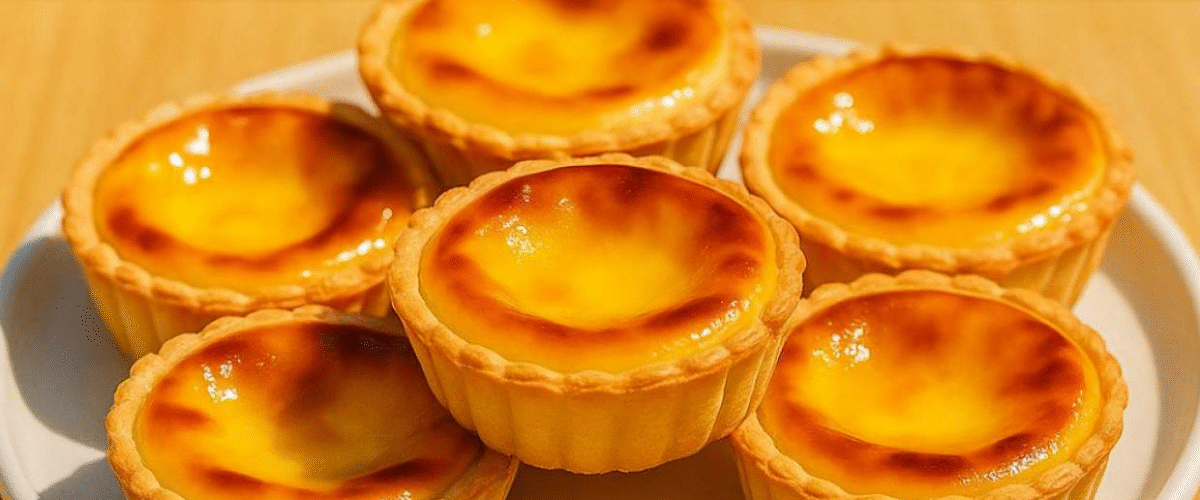
Estas famosas tartas de queso fundido de Tokio son mantecosas, cremosas y ligeramente ácidas, con una cubierta bellamente caramelizada. Con un solo bocado, entenderás por qué se han vuelto icónicas en todo el mundo. La corteza es crujiente pero tierna, y el rico relleno de queso se funde en un centro suave y cremoso que es pura comodidad. Servidas calientes, son pura magia, pero incluso frías, son peligrosamente adictivas.
Me enamoré de estas tartas de queso durante un viaje a Tokio. El aroma a mantequilla dorada y queso derretido inundaba la panadería, atrayendo a la gente a las vitrinas. Al llegar a casa, tuve que recrearlas y, tras muchas pruebas, esta versión ofrece el mismo placer de panadería. Cada tarta está rellena a mano y untada con yema de huevo para lograr ese acabado dorado brillante, y el relleno se mueve ligeramente al sacarlo del horno. Absolutamente irresistible.
¿Por qué estas tartas de queso son tan adictivas?
- Centros cremosos y fundidos: el relleno es sedoso, con queso y con la cantidad justa de dulce y salado.
- Corteza crujiente y mantecosa: la harina de almendras agrega profundidad y textura adicionales a la base.
- Porciones perfectas: cada tarta es un capricho individual, sin necesidad de cortarla ni ensuciar.
- Mejor que la panadería: Recién salido del horno, nada se compara con la versión casera.
Ingredientes que necesitarás
Para la corteza
- 60 g de mantequilla sin sal, ablandada
- 50 g de azúcar en polvo
- 1 g de sal (una pizca pequeña)
- 1 yema de huevo
- 30 g de harina de almendras
- 110 g de harina baja en gluten (la harina para repostería funciona muy bien)
Para el relleno de queso fundido
- 170 g de queso crema a temperatura ambiente
- 35 g de crema batida
- 40 g de clara de huevo
- 40 g de azúcar granulada
- 1 yema de huevo (para pincelar la parte superior)
Herramientas que necesitarás
- Cuencos para mezclar y batidora de mano eléctrica
- Espátula de goma y batidor
- Moldes para tartas (8 pequeños y redondos)
- Rodillo y bandeja para hornear
- Manga pastelera o cuchara para rellenar
Antes de empezar
- Ablande la mantequilla y el queso crema: ¡ Esto hace que la mezcla sea suave y fácil, sin grumos!
- Enfríe la masa de tarta: una corteza fría queda más crujiente y mantiene mejor su forma.
- Utilice una báscula si es posible: la precisión es clave para lograr una textura perfecta, especialmente con el relleno.
Paso a paso para preparar la famosa tarta de queso fundido de Tokio
1: Prepara la masa de tarta
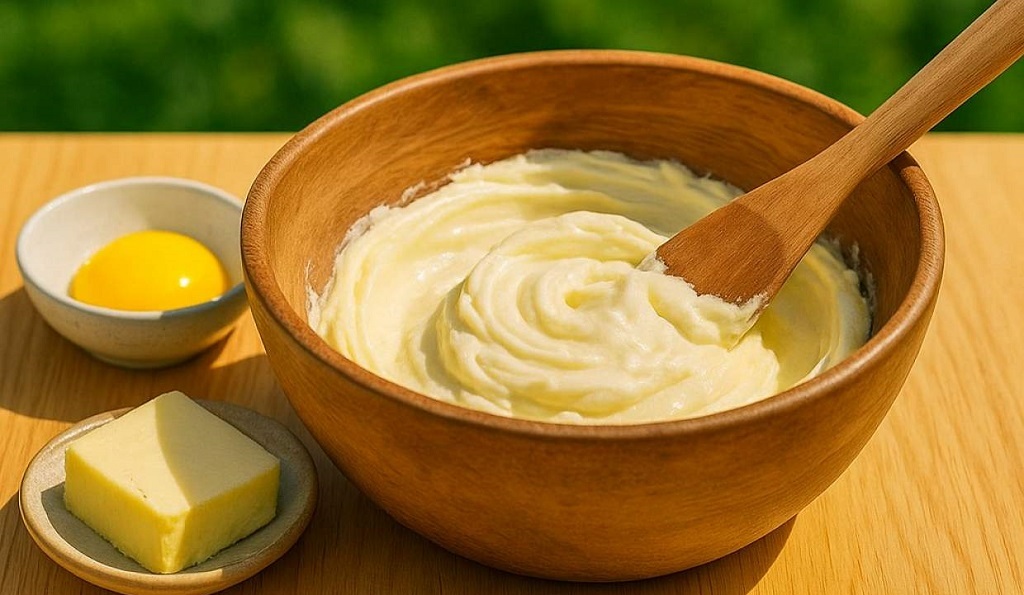
- En un bol, bata la mantequilla ablandada con el azúcar en polvo hasta obtener una mezcla suave y esponjosa.
- Añade la sal y la yema de huevo, mezclando hasta que quede suave.
- Incorpore la harina de almendras y luego, poco a poco, la harina baja en gluten. Mezcle hasta que la masa esté bien integrada, sin trabajarla demasiado.
- Forme un disco plano, envuélvalo en film y enfríelo en el refrigerador durante al menos 30 minutos.
2: Dar forma y hornear las tartaletas
- Precaliente el horno a 170°C (340°F).
- Extienda la masa fría sobre una superficie ligeramente enharinada hasta que tenga un espesor de aproximadamente ⅛ de pulgada.
- Cut out rounds to fit your tart molds, gently pressing the dough into each mold and trimming the edges clean.
- Prick the bottoms with a fork, then chill the filled molds for another 10 minutes to prevent shrinking.
- Bake for 13-15 minutes until lightly golden. Let them cool completely before filling.
3: Make the Cheese Filling
- In a medium bowl, beat the cream cheese until completely smooth.
- Add in the whipping cream and sugar, mixing until well incorporated.
- Whisk in the egg white until the filling is glossy and slightly airy. Avoid overmixing to keep it light.
4: Fill the Tart Shells
- Spoon or pipe the cheese filling into the baked tart shells, filling just below the rim.
- Gently smooth the tops with the back of a spoon or small spatula.
5: Brush and Bake Again
- Lightly beat the egg yolk and brush a thin layer over the tops of each tart. This gives them that golden, glossy finish.
- Bake at 220°C (428°F) for 5-7 minutes, or until the tops are caramelized and start to puff slightly.
- Watch closely near the end to avoid over browning.
6: Cool and Serve
- Let the tarts rest for 5-10 minutes to set slightly, then serve warm for the full molten experience.
- For a firmer custard, cool completely and chill in the fridge for a few hours they’re delicious either way.
Chef’s Tip: Want that signature Japanese bakery wobble? Slightly underbake the centers by 30 seconds and serve them while still warm. The spoon dip is unreal.
Storage Tips for Tokyo’s Molten Cheese Tarts
- Room Temperature: Best enjoyed warm within a few hours of baking for that molten center experience.
- Refrigerator: Store cooled tarts in an airtight container for up to 3 days. The texture will firm up but remain creamy.
- Reheating: Warm in a 350°F (175°C) oven for 5-7 minutes or until the centers are soft again. Avoid microwaving it can break the filling.
- Freezer: Freeze unfilled baked shells or filled (unbaked) tarts for up to 1 month. Bake from frozen at 400°F (200°C) for 10-12 minutes.
Serving Suggestions
- Serve with a dusting of powdered sugar for a café style touch.
- Add a side of fresh fruit like strawberries or blueberries to balance the richness.
- Enjoy with green tea or coffee hot or iced for a cozy bakery at home feel.
- Plate individually with a swirl of whipped cream or a caramel drizzle for dinner parties.
FAQs About Tokyo’s Molten Cheese Tart Recipe
Why is my filling too runny?
It might have been underbaked or the cream cheese wasn’t firm enough. Let the tarts set a few minutes after baking before serving.
Can I use all purpose flour instead of low gluten flour?
Yes, but the crust will be slightly firmer and less delicate. For a tender shell, cake flour or low gluten is ideal.
Can I skip the almond flour?
You can substitute with more flour, but the almond flour gives a richer, more flavorful crust.
Can I make these in muffin tins?
¡Sí! Simplemente cúbrelos con papel o engrásalos bien. Ajusta ligeramente el tamaño y el tiempo de horneado, ya que los moldes para muffins son más profundos que los de tartas.