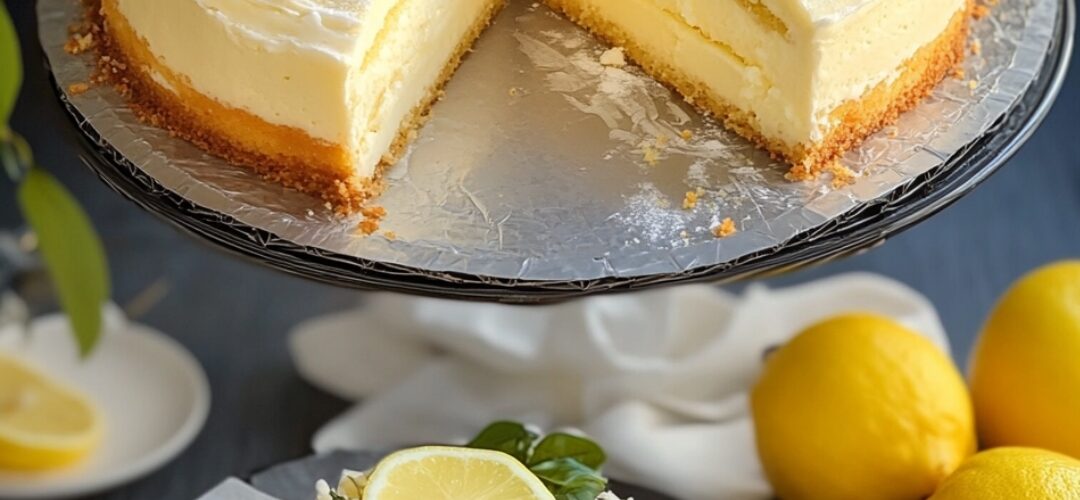
Este pastel de crema de limón es un postre delicioso que combina el sabor ácido del limón con un pastel suave y jugoso. El relleno de crema de limón añade una capa cremosa y cremosa que complementa a la perfección el esponjoso pastel. Es un capricho perfecto para los amantes del limón y una excelente opción para ocasiones especiales o simplemente para un capricho dulce.
Ingredientes
Para el relleno de crema de limón:
- Huevo: 1 grande
Ayuda a espesar y enriquecer la crema pastelera, dándole una textura suave. - Sal: Una pizca
Equilibra el dulzor y realza el sabor del limón. - Azúcar: 50 gramos (3 cucharadas)
Endulza la crema pastelera y equilibra la acidez del limón. - Maicena: 40 gramos (3 cucharadas)
Espesa la crema pastelera, asegurando una consistencia cremosa. - Leche: 300 ml (1 1/2 tazas / 10,5 oz)
Forma la base de la crema pastelera, haciéndola rica y cremosa. - Ralladura de un limón:
añade un estallido de sabor y fragancia cítrica a las natillas. - Jugo de un limón:
aporta el sabor ácido y refrescante que define a esta crema.
Para la masa del pastel:
- Huevos: 2 grandes
Da estructura al pastel y ayuda a que suba. - Sal: Una pizca
Realza el sabor general del pastel. - Azúcar: 100 gramos (6 cucharadas)
Endulza el pastel y ayuda a lograr una miga tierna. - Aceite vegetal : 120 ml (2/3 de taza / 4,3 oz)
Agrega humedad y asegura que el pastel se mantenga suave. - Extracto de vainilla: 1 cucharadita
Agrega una dulzura sutil y profundidad de sabor al pastel. - Harina para todo uso: 220 gramos (1 1/2 tazas / 7,7 oz)
La base del pastel, aportando estructura y textura. - Polvo de hornear: 15 gramos (4 cucharaditas / 0,5 oz)
Leuda el pastel, ayudándolo a elevarse y volverse liviano y esponjoso.
Instrucciones
Paso 1: Preparar el relleno de crema pastelera de limón
- Mezcla los ingredientes:
En una cacerola mediana, bate 1 huevo, una pizca de sal, 50 gramos de azúcar y 40 gramos de maicena hasta obtener una mezcla suave. Agrega gradualmente 300 ml de leche, batiendo continuamente para evitar grumos.
Este paso garantiza una crema pastelera suave y sin grumos, clave para una textura cremosa. - Cocinar la crema:
Poner la cacerola a fuego medio, removiendo constantemente. Cocinar la mezcla hasta que espese y empiece a burbujear, unos 5-7 minutos. Una vez espesa, retirar del fuego e incorporar la ralladura y el jugo de un limón.
Remover constantemente evita que la crema se queme y asegura una consistencia uniforme. - Cool the Custard:
Pour the custard into a bowl, cover it with plastic wrap (pressing the wrap directly onto the surface to prevent a skin from forming), and let it cool to room temperature.
Cooling the custard before using it in the cake helps maintain the integrity of the layers.
Step 2: Prepare the Cake Batter
- Preheat the Oven:
Preheat your oven to 180°C (350°F). Grease and flour a 9-inch round cake pan or line it with parchment paper.
Preheating the oven ensures the cake bakes evenly from the start. - Mix Wet Ingredients:
In a large mixing bowl, whisk together 2 eggs, a pinch of salt, and 100 grams of sugar until the mixture is pale and slightly thickened. Gradually add 120 ml of vegetable oil and 1 teaspoon of vanilla extract, mixing until well combined.
Whisking the eggs and sugar until pale gives the cake a light and airy texture. - Combine Dry Ingredients:
In a separate bowl, sift together 220 grams of all-purpose flour and 15 grams of baking powder. Gradually add the dry ingredients to the wet ingredients, mixing just until combined.
Sifting the dry ingredients helps incorporate air, making the cake lighter.
Step 3: Assemble and Bake the Cake
- Layer the Batter and Custard:
Pour half of the cake batter into the prepared pan, spreading it evenly. Gently spoon the cooled lemon custard over the batter, spreading it evenly but leaving a small border around the edges. Pour the remaining cake batter over the custard, ensuring it covers the custard completely.
Layering the custard between the batter creates a delicious surprise inside the cake. - Bake the Cake:
Bake in the preheated oven for 30-35 minutes, or until a toothpick inserted into the center comes out clean (though it might have some custard on it). The cake should be golden brown and spring back when touched lightly.
Baking the cake at the right temperature ensures it cooks evenly and doesn’t dry out. - Cool the Cake:
Allow the cake to cool in the pan for 10 minutes, then transfer it to a wire rack to cool completely.
Cooling the cake properly prevents it from becoming soggy.
Step 4: Serve
- Serve and Enjoy:
Once the cake is completely cool, dust it with powdered sugar if desired. Slice and serve the cake as a delicious dessert or a sweet treat with your afternoon tea.
Powdered sugar adds a touch of sweetness and a beautiful finish to the cake.
Nutritional Information (Per Slice)
- Calories: Approximately 250-300 calories per slice
- Protein: 4-5g
- Fat: 10-12g
- Carbohydrates: 35-40g
- Fiber: 1g
Tips for Success
- Use limón fresco: el jugo y la ralladura de limón fresco aportan el mejor sabor, haciendo que las natillas sean brillantes y ácidas.
- No mezcle demasiado: al combinar los ingredientes húmedos y secos para el pastel, mezcle solo hasta que se combinen para evitar que el pastel quede denso.
- Enfriar las natillas: asegúrese de que las natillas estén completamente frías antes de colocarlas en el pastel para evitar que se derritan en la masa.
Preguntas frecuentes
- ¿Puedo usar extracto de limón en lugar de limón fresco?
- Sí, pero el jugo y la ralladura de limón fresco le dan el mejor sabor. Si usa extracto, use aproximadamente una cucharadita.
- ¿Cómo guardo el pastel?
- Guarde el pastel en un recipiente hermético en el refrigerador hasta por 3 días. Deje que alcance la temperatura ambiente antes de servir.
- ¿Puedo congelar el pastel?
- Sí, puedes congelar el pastel. Envuélvelo bien en film transparente y luego en papel aluminio. Descongélalo en el refrigerador antes de servir.
Conclusión
Este pastel de crema pastelera de limón es una deliciosa combinación de crema pastelera ácida y un pastel suave y esponjoso. Es un postre perfecto para cualquier ocasión, con un equilibrio de sabores dulces y ácidos que sin duda impresionará.