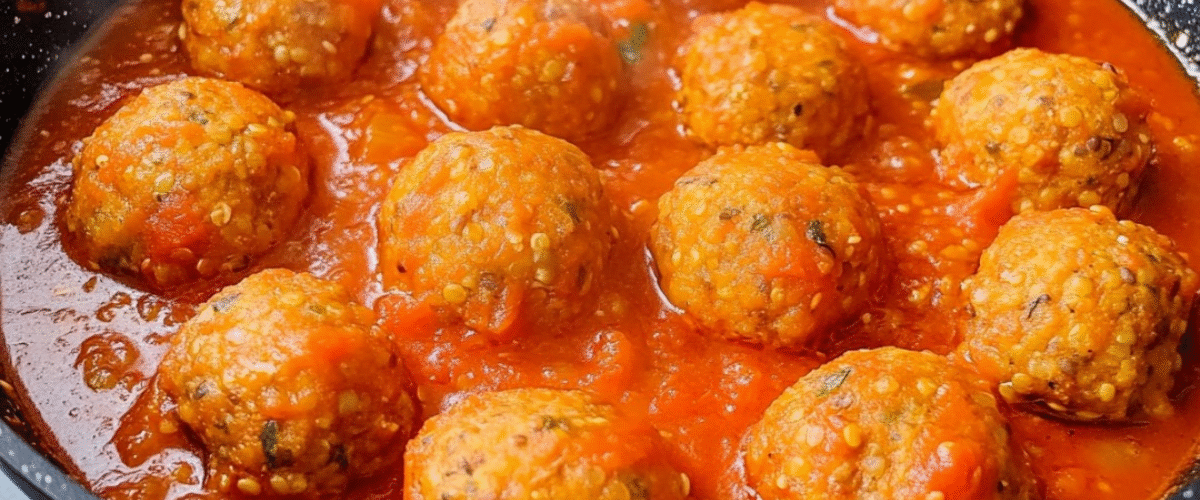
Estas albóndigas veganas de lentejas, ricas en proteínas y en una rica salsa de tomate, ofrecen la misma sensación de bienestar y satisfacción que las albóndigas tradicionales, pero son completamente vegetales. Esta sustanciosa receta transforma las humildes lentejas en tiernas y sabrosas albóndigas que se cocinan a fuego lento en una sabrosa salsa de tomate, creando una comida completa que incluso los carnívoros adorarán. Ricas en proteína y fibra vegetal, estas albóndigas de lentejas demuestran que la cocina vegana puede ser nutritiva y deliciosa.
Ingredientes
Para las bolitas de lentejas:
- 250 g (1¼ tazas) de lentejas rojas o verdes, secas
- 1 cebolla mediana, finamente picada
- 1 zanahoria mediana, rallada
- 2 dientes de ajo picados
- 4-5 cucharadas de harina para todo uso
- 2-3 cucharadas de aceite vegetal
- 1 cucharadita de sal
- ½ cucharadita de pimienta negra
- 1 cucharadita de pimentón dulce
- 2 cucharadas de perejil fresco picado
Para la salsa de tomate:
- 70 g (5 cucharadas) de aceite de aguacate o aceite vegetal
- 1 cucharada de harina para todo uso
- 80 g (⅓ taza) de pasta de tomate
- 500 ml (2 tazas) de agua tibia o caldo de verduras
- Sal y pimienta al gusto
- ½ cucharadita de pimentón
- 2 cucharadas de perejil fresco picado para decorar
Instrucciones paso a paso
Preparando las lentejas
Enjuague bien las lentejas con agua fría corriente 2 o 3 veces hasta que el agua salga clara. Coloque las lentejas limpias en un recipiente grande y cúbralas completamente con agua. Déjelas en remojo de 2 a 3 horas para ablandarlas y facilitar su licuado.
Después de remojarlas, escúrralas bien y páselas a un procesador de alimentos o una licuadora de alta velocidad. Procéselas hasta obtener una consistencia suave y pastosa. La mezcla debe mantenerse unida, pero no completamente líquida. Si es necesario, añada una cucharada de agua para facilitar la mezcla, pero evite que quede demasiado líquida.
Creando la base vegetal
Calienta 2-3 cucharadas de aceite vegetal en una sartén grande a fuego medio. Agrega la cebolla finamente picada y cocina de 3 a 4 minutos hasta que esté translúcida y blanda. Agrega la zanahoria rallada y el ajo picado, cocinando de 3 a 4 minutos más hasta que las verduras estén tiernas.
Sazona la mezcla de verduras con sal, pimienta y pimentón, removiendo bien para distribuir las especias uniformemente. Cocina durante 2-3 minutos más para que los sabores se integren. Retira del fuego y deja enfriar un poco.
Formación de las bolas de lentejas
En un tazón grande, combine las lentejas procesadas con la mezcla de verduras cocidas. Mezcle bien hasta que todos los ingredientes estén bien incorporados. Agregue gradualmente de 3 a 4 cucharadas de harina, comenzando con 3 y agregando más si es necesario para lograr la consistencia adecuada.
The mixture should be firm enough to hold its shape when formed into balls but not so dry that it crumbles. With clean, slightly damp hands, form the mixture into golf ball-sized portions, rolling them gently between your palms to create smooth, round balls. You should have approximately 12-15 lentil balls.
Preparing the Tomato Sauce
In the same large skillet used for the vegetables, heat the avocado oil over medium heat. Add 1 tablespoon of flour to the oil, whisking constantly to create a light roux. Cook for 1-2 minutes until the flour is lightly golden and fragrant.
Gradually add the tomato paste, whisking continuously to prevent lumps from forming. Cook the tomato paste mixture for 2-3 minutes until it darkens slightly and becomes aromatic. Slowly pour in the warm water or vegetable broth while whisking constantly to create a smooth sauce.
Season the sauce with salt, pepper, and paprika. Bring the mixture to a gentle simmer, then reduce heat to low and cook for 2-3 minutes until the sauce thickens slightly.
Cooking the Lentil Balls
Carefully place the formed lentil balls into the simmering tomato sauce, ensuring they don’t overcrowd the pan. Cover the skillet and cook on low heat for 5 minutes without disturbing the balls to allow them to set.
Gently turn each lentil ball using a spoon or tongs, being careful not to break them. Cover again and simmer for another 5 minutes. The lentil balls should be firm to the touch and heated through completely.
Final Touches and Serving
Taste the sauce and adjust seasoning with additional salt, pepper, or paprika as needed. Sprinkle fresh chopped parsley over the lentil balls and sauce just before serving.
Serve immediately while hot, traditionally accompanied by creamy mashed potatoes, rice, or crusty bread to soak up the delicious tomato sauce.
Nutritional Information and Timing
Soaking Time: 2-3 hours
Preparation Time: 25 minutes
Cooking Time: 20 minutes
Total Time: 45 minutes (plus soaking)
Serves: 4-6
Nutritional Information per serving (3-4 lentil balls with sauce):
- Calories: 285
- Protein: 16g
- Carbohydrates: 35g
- Dietary Fiber: 12g
- Fat: 10g
- Saturated Fat: 1.5g
- Sodium: 485mg
- Potassium: 685mg
- Iron: 25% DV
- Folate: 45% DV
- Magnesium: 18% DV
These vegan lentil balls provide an excellent source of plant-based protein and fiber, making them incredibly filling and nutritious. The high iron and folate content makes this dish particularly beneficial for those following plant-based diets.
Recipe Variations and Substitutions
Lentil Alternatives
While red or green lentils work best for this recipe, you can experiment with other varieties. Brown lentils create a nuttier flavor, while black beluga lentils add visual interest. For a quicker version, you can use pre-cooked canned lentils, though the texture may be slightly different.
Flavor Variations
Enhance the lentil balls with different herbs and spices. Try adding fresh herbs like oregano, basil, or thyme to the mixture. For Mediterranean flavors, include sun-dried tomatoes and olives. For an Indian twist, add curry powder, cumin, and coriander.
Binding Alternatives
If you prefer gluten-free options, substitute the all-purpose flour with chickpea flour, almond flour, or ground flaxseed meal. Each will provide slightly different textures and flavors while maintaining the binding properties needed for the balls to hold together.
Sauce Variations
The tomato sauce can be customized in numerous ways. Add sautéed mushrooms for earthiness, bell peppers for sweetness, or spinach for extra nutrition. For a richer sauce, include a splash of red wine or balsamic vinegar. Coconut milk can be added for creaminess.
Cooking Method Alternatives
These lentil balls can also be baked for a slightly different texture. Place them on a lined baking sheet and bake at 200°C (392°F) for 20-25 minutes, turning once. Then add them to the prepared sauce for the final simmer.
Storage and Make-Ahead Tips
The lentil ball mixture can be prepared up to 24 hours in advance and stored covered in the refrigerator. Form the balls just before cooking for the best texture. Cooked lentil balls in sauce will keep in the refrigerator for up to four days and actually improve in flavor as they sit.
For freezing, place the formed uncooked lentil balls on a baking sheet and freeze until solid, then transfer to freezer bags. They can be cooked directly from frozen, adding a few extra minutes to the cooking time. The complete dish can also be frozen for up to three months.
Frequently Asked Questions
Can I make these lentil balls without soaking the lentils first? While soaking significantly improves the texture and makes blending easier, you can use unsoaked lentils if you have a powerful food processor. You may need to add a bit more water during processing, and the balls might be slightly more dense. Alternatively, you can quickly cook the lentils until just tender, then drain and process them.
Why are my lentil balls falling apart in the sauce? This usually happens when the mixture is too wet or doesn’t have enough binding agent. Make sure to drain the soaked lentils thoroughly and add flour gradually until the mixture holds together well. Also, avoid stirring the balls too vigorously when they first go into the sauce, and let them set for the full 5 minutes before turning.
Can I make this recipe oil-free? Yes, you can make an oil-free version by water-sautéing the vegetables and omitting the oil from the sauce. For the sauce, you can whisk the flour directly with a small amount of water before adding to the tomato paste and remaining liquid. The texture will be slightly different but still delicious.
¿Cuál es la mejor manera de servir estas albóndigas de lentejas? Tradicionalmente se sirven con puré de papas, pero también son deliciosas con pasta, arroz o polenta. Para una opción más ligera, sírvalas con una ensalada fresca o verduras al vapor. También son ideales para rellenar sándwiches o como aperitivo con pan crujiente.
¿Cómo puedo hacer que las bolitas de lentejas queden más firmes? Si las bolitas de lentejas parecen demasiado blandas, prueba a añadir más harina o a dejar reposar la mezcla en el refrigerador durante 30 minutos antes de formarlas. También puedes freírlas brevemente en una sartén con un poco de aceite antes de añadirlas a la salsa, lo que les dará una textura más firme.
Estas bolitas veganas de lentejas en salsa de tomate demuestran que la cocina vegetal puede ser tan satisfactoria y sabrosa como los platos tradicionales de carne. La combinación de lentejas ricas en proteínas, verduras aromáticas y una rica salsa de tomate crea una comida reconfortante que gusta tanto a veganos como a omnívoros. Ya sea para una cena entre semana o para ocasiones especiales, esta receta ofrece una nutrición y un sabor excepcionales en cada bocado.