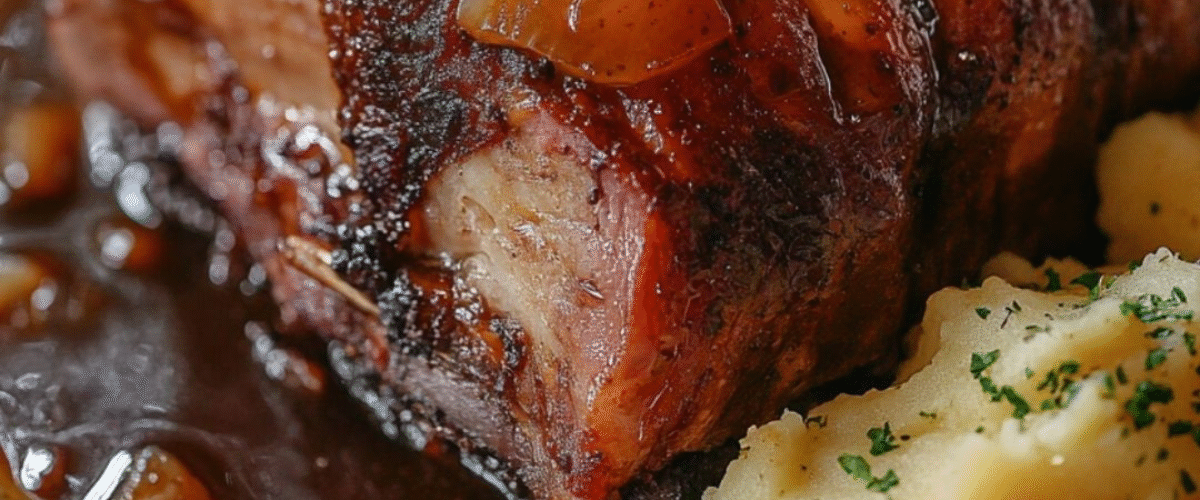
Jugoso, crujiente y lleno de sabor, ¡este Schweinebraten (asado de cerdo alemán) es un clásico! Asado a fuego lento con hierbas y una rica salsa, es perfecto para cenas familiares y ocasiones especiales.
Dificultad
Intermedio
Tiempo de preparación
20 minutos
Tiempo de cocción
2 horas
Tiempo total
2 horas 20 minutos
Porciones
6 porciones
¿Qué es Schweinebraten?
El Schweinebraten es un delicioso y crujiente asado de cerdo alemán, muy popular en Baviera. Es un cerdo jugoso y delicioso con una capa crujiente (¡es mi parte favorita!). Generalmente se prepara con paleta o panceta de cerdo. Se cocina a fuego lento con cerveza, ajo, cebolla y semillas de alcaravea, lo que lo hace tan delicioso.
Obtén las últimas publicaciones y mucho más de EasyWorldRecipes en tu bandeja de entrada
Utilizamos tus datos personales para ofrecerte publicidad basada en tus intereses, como se describe en nuestro Aviso de privacidad.
Se suele servir durante el Oktoberfest o en reuniones familiares. La deliciosa salsa de cerveza con la que se cocina le da un sabor que complementa a la perfección el asado. ¡Es una receta alemana imprescindible!
¿Por qué me encanta esta receta?
La primera vez que probé el Schweinebraten fue en Múnich. Me enamoré al instante. El sabor del jugoso cerdo asado, la superficie crujiente y la salsa… fue una comida que no olvidaré por mucho tiempo.
Preparar este asado de cerdo en casa me trae recuerdos inolvidables. Me encanta servirlo como cena informal o incluso para ocasiones especiales. Y, seamos sinceros, ¡no hay nada más satisfactorio que el crujiente chicharrón de cerdo al hornearse! ¡Qué rico!
Ingredientes clave y sustituciones del Schweinebraten
Paletilla o panceta de cerdo : Estos son los cortes tradicionales, por su contenido de grasa y su ternura. También puede usar lomo de cerdo para un asado más magro, pero asegúrese de que tenga una capa de grasa para lograr una superficie crujiente.
Cerveza oscura : Le da sabor y riqueza a la salsa. Para una versión sin alcohol, también me gusta usar caldo de res.
Semillas de alcaravea : Aportan un sabor terroso y aromático. Si no las encuentras, también puedes usar semillas de hinojo como un buen sustituto.
Ajo y cebolla : Imprescindibles para asar la base y preparar la salsa. Recomiendo usar ajo y cebolla frescos.
Tubérculos : La zanahoria, el apio y la chirivía realzan el sabor del caldo. También puedes añadir cualquier otra verdura sabrosa que tengas en casa.
Condimentos : Sal, pimienta y pimentón son tradicionales, pero puedes añadir una pizca de tomillo o romero para un sabor más intenso. Me encanta usar hierbas frescas de mi huerto, cuando están en temporada, para un sabor aún mejor.
Equipment You’ll Need
- Dutch Oven: Ideal for roasting and making the gravy in one pot.
- Sharp Knife: For scoring the pork skin.
- Meat Thermometer: Ensures the roast is cooked to perfection.
- Basting Brush: Helps keep the roast moist and flavorful.
- Roasting Pan: For larger roasts or if you don’t have a Dutch oven.
Step-by-Step Instructions for Perfect Schweinebraten
Step 1: Prepare the Pork
- Score the Skin: Using a sharp knife, score the pork skin in a crisscross pattern, being careful not to cut into the meat (this way it will not loose it’s juices). This creates the perfect crispy top crackling.
- Season the Pork: Rub the pork with 1 tbsp salt, 1 tsp pepper, 1 tsp paprika, and 1 tsp caraway seeds. Let it rest for 30 minutes at room temperature, covered in foil.
Step 2: Prepare the Vegetables and Beer Base
- Preheat Oven: Set your oven to 350°F (175°C), with heating from the top and the bottom.
- Add the Vegetables: Place 2 onions (quartered), 2 carrots (sliced), and 2 celery stalks (chopped) in the bottom of a Dutch oven or roasting pan.
- Add Beer: Pour 1 ½ cups (350ml) of dark beer and 1 cup (240ml) chicken stock over the vegetables.
Obtén las últimas publicaciones y mucho más de EasyWorldRecipes en tu bandeja de entrada
Utilizamos tus datos personales para ofrecerte publicidad basada en tus intereses, como se describe en nuestro Aviso de privacidad.
Step 3: Roast the Pork
- First Roast: Place the pork on top of the vegetables, skin-side up. Roast uncovered for 1 ½ hours, basting every 30 minutes with the beer mixture.
- Crisp the Skin: Increase the oven temperature to 425°F (220°C) for the last 20-30 minutes to crisp the pork skin.
Step 4: Make the Gravy
- Remove Pork: Transfer the roast to a cutting board and let it rest for 10-15 minutes.
- Blend Gravy: Strain the roasting liquid into a saucepan, discarding the vegetables. Simmer and reduce for 10 minutes. For a thicker gravy, whisk in 1 tbsp flour dissolved in water.
Step 5: Serve and Enjoy
- Slice and Plate: Carve the pork into slices, ensuring each piece has a bit of crackling. Serve with gravy and traditional sides.
Expert Tips for the Best Schweinebraten
Pat the Skin Dry: Ensures the crackling gets crispy, and it will avoid sogginess. I like to use a paper towel to do this.
Use a Thermometer: The internal temperature should be 160°F (71°C) for perfectly cooked pork, without drying it out.
Baste Often: Keeps the meat moist and infuses it with flavor. I recommend doing it every 20-30 minutes.
Let It Rest: Resting the meat locks in the juices, making every bite tender. Take it out of the oven and keep it on the counter for 10 – 15 minutes.
Obtén las últimas publicaciones y mucho más de EasyWorldRecipes en tu bandeja de entrada
Utilizamos tus datos personales para ofrecerte publicidad basada en tus intereses, como se describe en nuestro Aviso de privacidad.
Serving Suggestions
Schweinebraten pairs with any side dishes, but i love it with Kartoffelklöße (potato dumplings), Rotkohl (red cabbage), or a simple green salad. For a complete German experience, serve with a side of homemade sauerkraut and a glass of dark beer.
Make-Ahead and Storage
- Make-Ahead: Season the pork and chop the vegetables a day in advance. Store in the fridge until ready to roast.
- Storage: Leftovers can be stored in an airtight container in the fridge for up to 3 days.
- Freezing: Freeze sliced pork and gravy separately for up to 3 months. Thaw overnight before reheating.
- Reheating: Warm in a 325°F (160°C) oven for 15-20 minutes, covering with aluminium foil to prevent drying out. I also love to add additional chicken broth, if reheating it in the oven.
Frequently Asked Questions (FAQ)
Yes, pork loin or pork leg works too, though the crackling may differ.
Substitute the beer with additional chicken stock or apple cider for a similar depth of flavor.
Keep the skin dry and roast at a high temperature toward the end.
Learn how to make Traditional Schweinebraten, a Bavarian pork roast with crispy crackling and beer gravy. This recipe is perfect for festive occasions or Sunday dinners!
- 3 lbs (1.4kg) pork shoulder or belly
- 1 tbsp salt
- 1 tsp pepper
- 1 tsp paprika
- 1 tsp caraway seeds
- 2 onions, quartered
- 2 carrots, sliced
- 2 celery stalks, chopped
- 1 1/2 cups (350ml) dark beer
- 1 cup (240ml) chicken stock
- Prepare Pork: Score the skin and season with salt, pepper, paprika, and caraway seeds. Let rest.
- Prepare Vegetables: Arrange onions, carrots, and celery in a roasting pan or Dutch oven. Add beer and stock.
- Roast Pork: Roast at 350°F (175°C) for 1 ½ hours, basting occasionally. Increase to 425°F (220°C) for the last 20-30 minutes to crisp the skin.
- Make Gravy: Strain and reduce the roasting liquid. Thicken if desired.
- Presentación : Cortar en rodajas y servir con guarniciones tradicionales.
Obtén las últimas publicaciones y mucho más de EasyWorldRecipes en tu bandeja de entrada
Utilizamos tus datos personales para ofrecerte publicidad basada en tus intereses, como se describe en nuestro Aviso de privacidad.
Notas
Utilice semillas de hinojo si no dispone de alcaravea.
Para obtener una corteza más crujiente, pincele la piel con aceite antes de asar.
¡Con las sobras se pueden hacer fantásticos sándwiches!
- Tiempo de preparación: 20 minutos
- Tiempo de cocción: 2 horas
- Categoría: Plato principal
- Cocina: alemana
Nutrición
- Calorías: 540 kcal
- Azúcar: 3g
- Grasas: 35g
- Carbohidratos: 8g
- Proteínas: 50g
Información nutricional
Este sitio web proporciona información nutricional estimada, que puede cambiar dependiendo de los ingredientes utilizados.