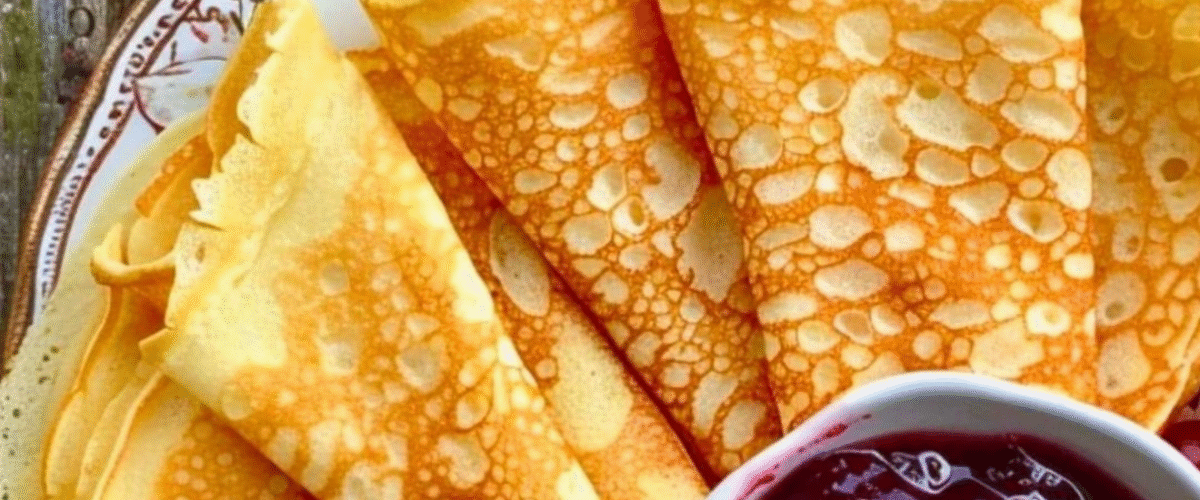
Estas crepas clásicas son ligeras, delicadas y versátiles, perfectas para rellenos dulces y salados. La masa se prepara rápidamente con solo unos pocos ingredientes, y el resultado son una pila de crepas finas y doradas, listas para rellenar con tus ingredientes favoritos.
Receta completa:
Ingredientes
- Harina común: 250 g
Proporciona la estructura y la base para la masa de crepes. - Huevos: 3, a temperatura ambiente
Agrega riqueza y ayuda a unir los ingredientes. - Leche entera: 500 ml.
La leche entera aporta a las crepas un sabor intenso y una textura suave. Se puede usar leche semidesnatada como alternativa más ligera, pero evite la desnatada, ya que puede resultar en crepas menos tiernas. - Mantequilla derretida: 20 g
Agrega sabor y evita que las crepes se peguen a la sartén durante la cocción. - Azúcar glas: 3 cucharadas
Endulza ligeramente las crepes, haciéndolas perfectas para postres. - Extracto de vainilla: 1/8 de cucharadita
Agrega un sutil sabor a vainilla, mejorando el sabor general de las crepes. - Sal: Una pizca
Equilibra el dulzor y realza los sabores de las crepes. - Aceite vegetal : para freír
Se utiliza para engrasar ligeramente la sartén, asegurando que las crepes se cocinen de manera uniforme sin pegarse.
Instrucciones
Paso 1: Preparar la masa
- Mezclar los ingredientes secos: En un tazón grande, tamizar los 250 g de harina común, 3 cucharadas de azúcar extrafino y una pizca de sal. Esto ayudará a distribuir uniformemente los ingredientes secos y a eliminar los grumos.
Tamizar los ingredientes secos garantiza una masa suave y sin grumos, crucial para hacer crepas finas. - Batir los huevos: En un recipiente aparte, cascar los 3 huevos y batirlos hasta que estén bien batidos. Este paso ayuda a asegurar que los huevos se incorporen uniformemente a la masa.
Batir los huevos primero facilita su incorporación a la masa, lo que resulta en una textura más suave. - Mezclar los ingredientes húmedos: Agregar gradualmente los 500 ml de leche, 20 g de mantequilla derretida y 1/8 de cucharadita de extracto de vainilla a los huevos batidos, batiendo constantemente. La mezcla debe quedar suave y bien integrada.
Agregar la leche gradualmente evita que se formen grumos. - Create the Batter: Slowly pour the wet ingredients into the dry ingredients, whisking continuously until you have a smooth, lump-free batter. If the batter seems too thick, you can add a little more milk until it reaches the consistency of heavy cream.
A smooth batter ensures that the crepes will cook evenly and have a delicate texture. - Rest the Batter: Let the batter rest for at least 30 minutes at room temperature. This allows the flour to fully hydrate and the gluten to relax, resulting in tender crepes.
Resting the batter is a crucial step that helps prevent the crepes from being tough.
Step 2: Cook the Crepes
- Heat the Pan: Heat a non-stick crepe pan or a large skillet over medium heat. Lightly grease the pan with a small amount of vegetable oil using a brush or a paper towel.
Using a non-stick pan and lightly greasing it ensures that the crepes will cook evenly and won’t stick. - Cook the Crepes: Pour about 1/4 cup of batter into the center of the pan, tilting and swirling the pan to spread the batter evenly into a thin layer. Cook for about 1-2 minutes, or until the edges start to lift and the bottom is golden brown.
Swirling the pan ensures that the batter spreads out thinly and evenly, resulting in perfectly cooked crepes. - Flip the Crepe: Carefully flip the crepe using a spatula and cook the other side for about 30 seconds, or until golden brown. Remove the crepe from the pan and place it on a plate. Repeat with the remaining batter, stacking the crepes as you go.
Flipping the crepes carefully ensures they don’t tear, keeping them intact for filling and serving.
Step 3: Serve the Crepes
- Serve Immediately: Crepes are best served warm. You can fill them with sweet options like Nutella, fresh berries, whipped cream, or jam. For savory crepes, consider fillings like ham, cheese, sautéed vegetables, or smoked salmon.
Serving the crepes warm makes them more pliable and easier to fill and fold. - Garnish: For an extra touch, sprinkle powdered sugar over the sweet crepes or garnish with fresh herbs for savory versions.
Garnishing adds visual appeal and enhances the overall presentation of the dish.
Nutritional Information (Per Serving)
- Calories: Approximately 150-200 calories per crepe (depending on fillings)
- Protein: 5-6g
- Fat: 7-8g
- Carbohydrates: 18-20g
- Fiber: 1g
Tips for Success
- Ensure Even Heat: Maintaining a consistent medium heat is key to cooking crepes evenly without burning them.
- Rest the Batter: Allowing the batter to rest is crucial for achieving the best texture. Don’t skip this step!
- Use una sartén antiadherente: una buena sartén antiadherente hará que sea más fácil dar vuelta las crepes y evitará que se peguen.
- Experimenta con rellenos: La belleza de las crepas reside en su versatilidad. Prueba diferentes combinaciones de rellenos para encontrar tu favorito.
Preguntas frecuentes
- ¿Puedo preparar la masa con antelación?
- Sí, puedes preparar la masa hasta con 24 horas de antelación. Guárdala en el refrigerador y revuélvela bien antes de usarla.
- ¿Cómo guardo las crepes sobrantes?
- Las crepas sobrantes se pueden guardar en un recipiente hermético en el refrigerador hasta por 3 días. Caliéntelas en una sartén o en el microondas antes de servir.
- ¿Puedo congelar los crepes?
- Sí, las crepas cocidas se pueden congelar. Coloque papel vegetal entre cada crepa y guárdelas en una bolsa para congelar hasta por dos meses. Recaliéntelas en una sartén o en el microondas directamente desde congeladas.
Conclusión
Estas crepas clásicas son una base maravillosa para una variedad de platillos. Ya sea que prefieras rellenos dulces o salados, su delicada textura y su sutil sabor las convierten en el lienzo perfecto para tu creatividad culinaria. Disfrútalas como un desayuno rápido, un almuerzo ligero o un postre exquisito.